Tree Service Winnipeg MB
Professional, certified arborists providing tree removal, tree trimming & more!
We're Your Go-To Tree & Stump Removal Contractors!
Welcome to Affordable Tree And Stump Experts, your trusted tree care specialists in Winnipeg. With over two decades of experience, our team of licensed arborists is dedicated to providing exceptional tree services at prices that don't break the bank. Our services include, but are not limited to: Tree pruning, removal, planting, and stump grinding, ensuring your landscape not only looks immaculate but thrives under our care. While the trees on our properties create great curb appeal, they can become problematic for your home and family and must be maintained appropriately. Whether you're looking to enhance your property's beauty or manage troublesome trees, we're here to offer you expert, personalized solutions.
We are a small, dedicated company specializing in top-tier tree services, blending expertise with eco-friendly practices, we offer meticulous tree work and health assessments, ensuring each tree's vitality.

Our Winnipeg Tree Services
Tree Removal and Storm Damage Prevention
Safe And Timely Removal of ANY Tree
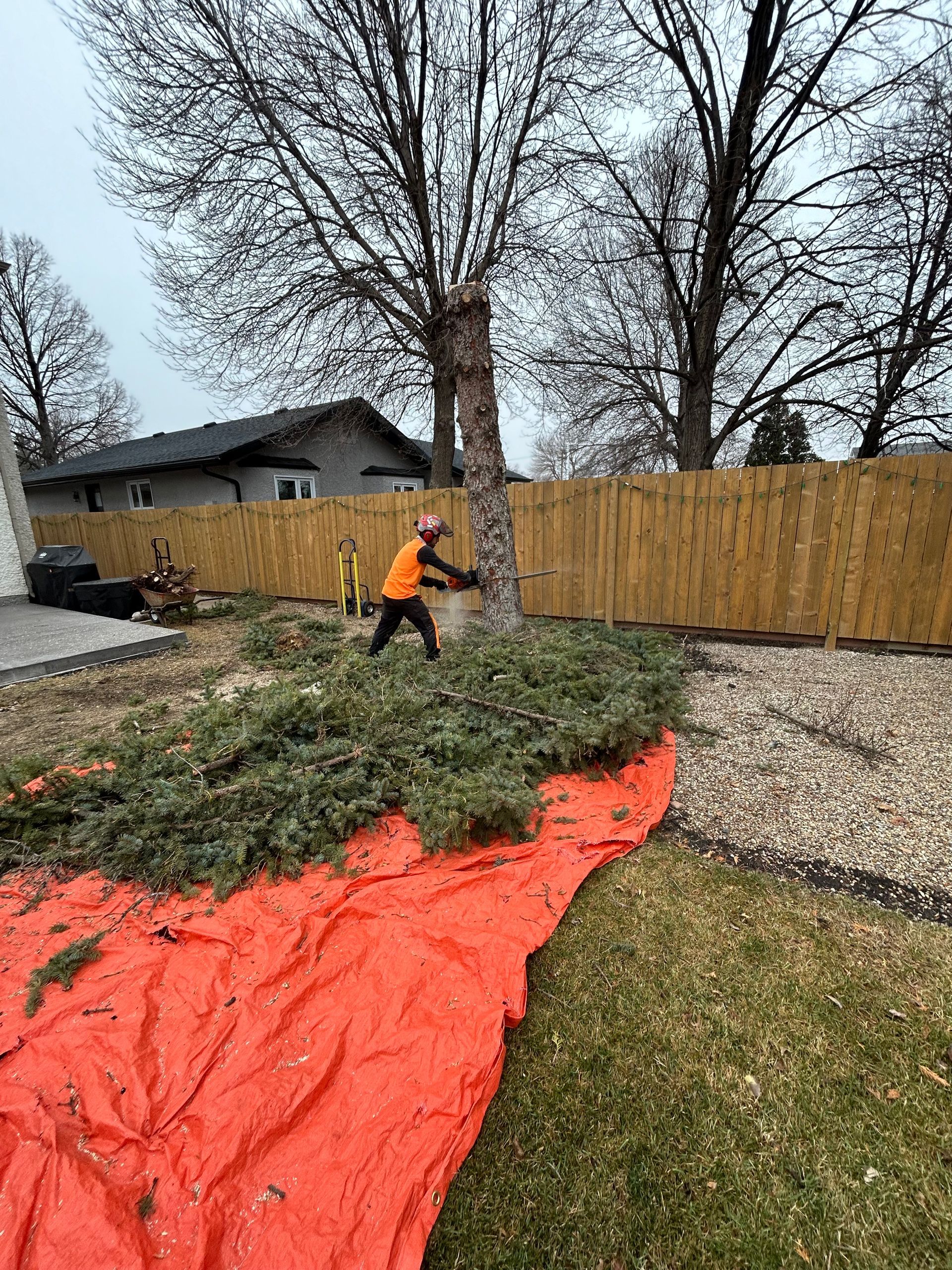
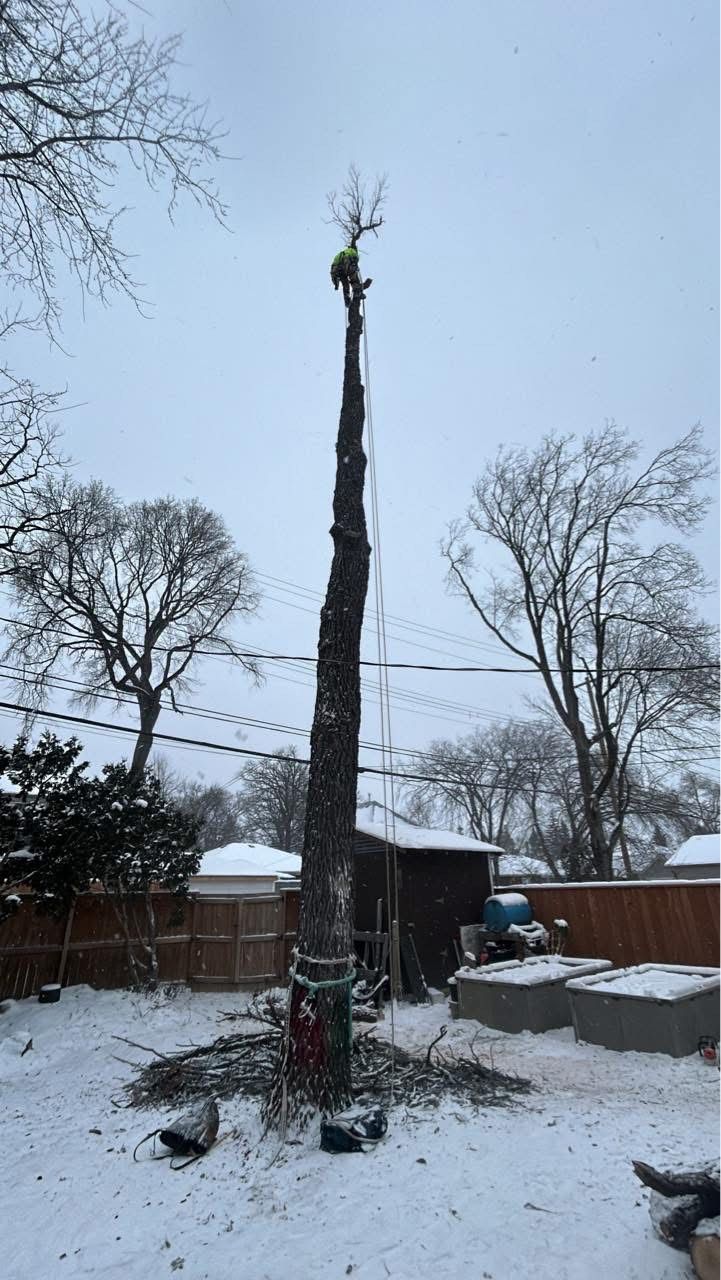
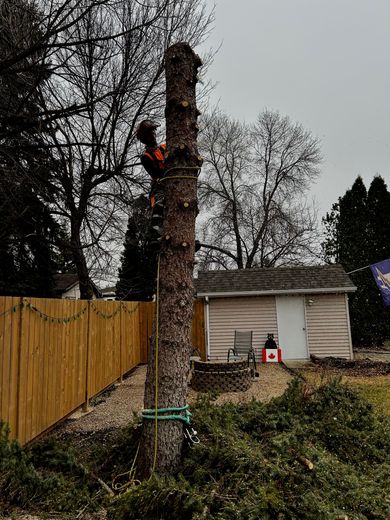
Do you have hazardous or dead trees on your property? We're equipped to safely remove these trees from top to bottom, including complete stump removal.
Tree Trimming and Pruning
Attention to DETAIL GUARANTEED
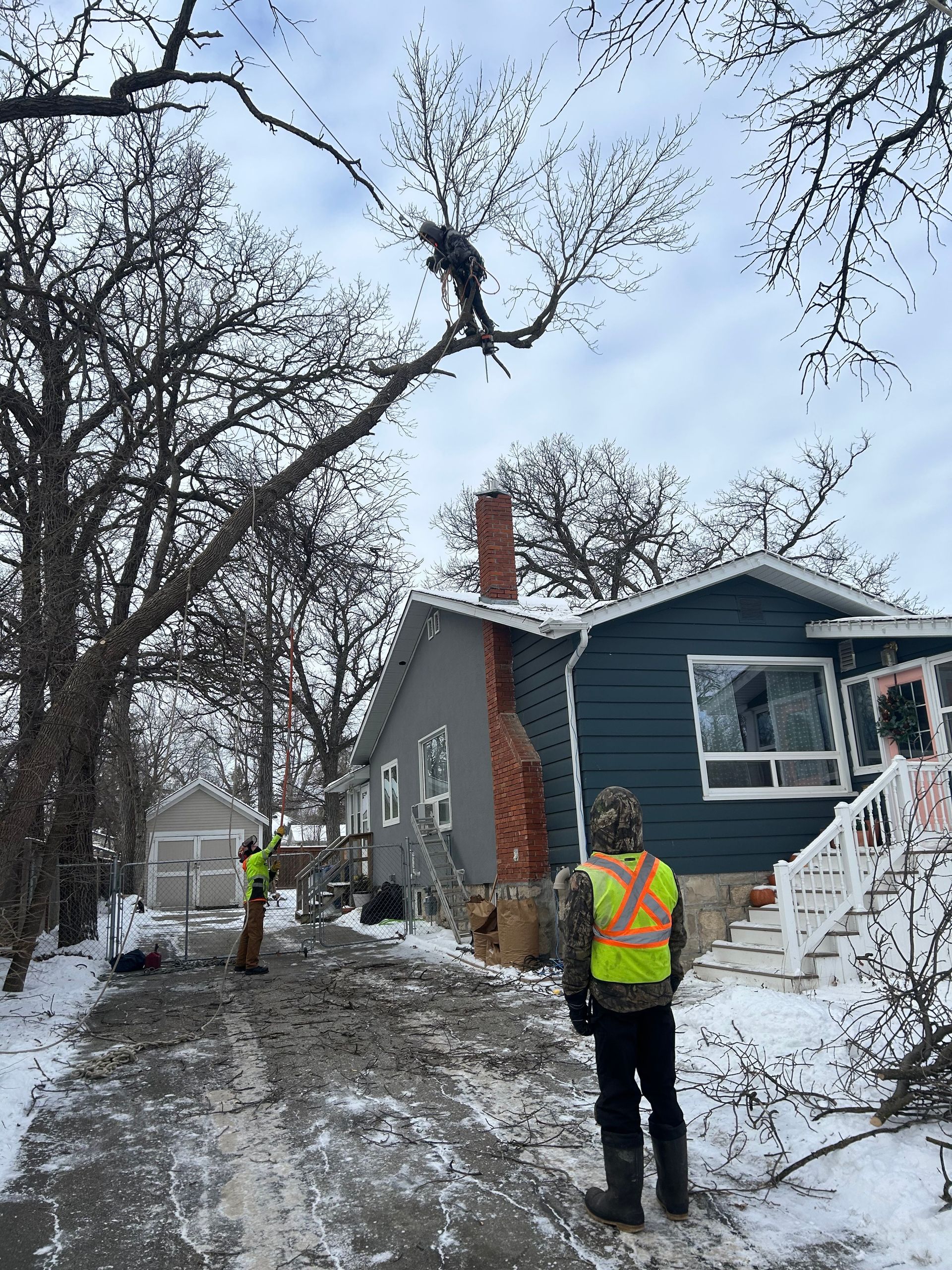
Trees growing out of control near your roof or powerlines need to be pruned. We can help you with that affordably and professionally today!
Stump Removal and Stump Grinding
BIG or SMALL We Can Handle Them ALL
Remove unsightly tree stumps from your yard to avoid tripping hazards and ultimately enhance the appearance of your yard
Hedge Trimming and Design
ALL Hedges Trimmed Just the Way You Like It - Professionally and Affordably!
We trim hedges so that they look exquisite again and compliment your yard. Ensure your landscape remains neat and aesthetically pleasing by maintaining your hedges, promoting healthy growth.
Tree Assessments and Inspections, Consultation
We Provide FREE QUOTES and Paid Arborist Consultations
Evaluate the health, stability, and safety of trees on your property. We identify potential risks, recommend necessary treatments, and provide tailored solutions to maintain the vitality of your trees.
Tree Planting, Transplanting, Seeding
Let Us Bring NEW LIFE To Your Home or Business
Elevate your home's landscape. We will select the perfect species for your environment, ensure proper planting techniques, and guide you through post-planting care to establish thriving trees.
Mini Excavating and Excavators for Hire
From TRENCH Digging To STUMP Removal, We Have You Covered!
Mini excavation services are used for tasks that require precise digging, such as removing stumps, exposing root systems, installing drainage, or preparing the ground for planting. They allow crews to work efficiently in tight spaces without damaging surrounding trees, lawns, or structures.
Lot Clearing and Forestry Mowing
Removing Unwanted Brush, Plants, and Trees QUICKLY and EFFICIENTLY!
Land clearing including is used to remove unwanted brush, trees, and overgrowth to create safe, usable, and build ready space. It’s an efficient way to open up dense areas, improve property access, and prepare land for construction, farming, or new landscape developments.
Soil Grading and Land Levelling
Making Sure Your Land Is LEVEL and STABLE For Over 20 Years!
Soil grading and land levelling are used to create smooth, stable, and properly sloped ground that supports healthy drainage and long lasting structures. It ensures the land is safe, even, and ready for landscaping, construction, or replanting after tree removal or excavation work.
Need More Info About Our Tree Services Company?
Our team of certified arborists has over 20 years experience in the tree services field. We can tackle any job you send our way and our promise is to deliver the absolute best service at an affordable and competitive rate.
Our services: To see the full list of services we offer, see here.
Get in touch! Customer satisfaction is our number one priority so if you have any questions about why or how we do what we do, please feel free to contact us!
About our team: Furthermore, if you want to get to know the crew a little better, you can do that here on our about page.
Locations We Serve in Manitoba
As a Winnipeg-based company we understand the smaller, rural areas need and deserve the same love and services as downtown, that’s why we are committed to serving a wide range of Winnipeg and the surrounding areas.
From the larger areas of Transcona to the smaller towns like Oakbank, Affordable Tree And Stump Experts Inc. has your tree care services handled by experienced, certified arborists, 7 days a week.
In Winnipeg, call (204) 509-5394 to schedule tree services like trimming and stump removal with a free quote.
Inside Winnipeg proper:
- Charleswood — West / southwest Winnipeg (former RM, now inside city limits). Mature yards and larger lots; mix of elm, ash, spruce, and pine. Most common issue is Dutch elm disease on remaining boulevard and backyard elms, plus winter-storm breakage on spruce. Most requested work: hazard pruning and full removals after ice/wind, plus stump grinding.
- St. James — West Winnipeg. Classic elm-lined streets. Dominant threat is Dutch elm disease (Winnipeg still removes thousands of infected American elms city-wide each year). Most requested work: DED inspection and sanctioned elm removal, followed by pruning for clearance over driveways and sidewalks.
- St. Vital — South / southeast Winnipeg. Heavy historic elm canopy plus a large ash population. Dutch elm disease is still the main killer; emerald ash borer has also been confirmed nearby (including Glenwood / north St. Vital area in 2026). Most requested work: elm and ash removal, EAB assessment/treatment on salvageable ash, and storm cleanup.
- Transcona — East Winnipeg. More mixed canopy (ash, elm, spruce, poplar) than the old west-side elm streets. Watch Dutch elm disease where elms remain and rising ash decline / EAB risk. Most requested work: tree removal and stump grinding, plus regular pruning for overhead lines and winter load.
East of Winnipeg:
- Springfield (RM of Springfield) — East of the city; includes Oakbank, Dugald, and Anola. Rural and acreage lots, shelterbelts, and town trees. Common problems: spruce cytospora canker and needle cast, poplar/aspen decline, and DED in village elms. Most requested work: large-tree / shelterbelt removal, storm cleanup, and stump grinding.
- Oakbank — East, in the RM of Springfield (just outside the Perimeter). Bedroom-community lots with spruce, ash, elm, and poplar. Same disease mix as Springfield; winter breakage is frequent. Most requested work: removal of declining spruce and hazard trees, plus pruning.
- Dugald — East, RM of Springfield. Farmsteads and residential lots. Spruce canker/needle disease and wind-thrown poplars are typical. Most requested work: acreage tree removal and land clearing / storm work.
- Anola — Further east, RM of Springfield. More rural. Shelterbelt decline and storm damage dominate over urban-style DED. Most requested work: removal and chipping of large rural trees.
- Ste. Anne — East of Winnipeg (Town of Ste. Anne / surrounding RM). Town elms plus farm shelterbelts. Dutch elm disease in town; spruce and poplar disease on acreages. Most requested work: elm removal and general tree removal.
- Richer — East, toward the RM of Ste. Anne. Rural. Storm damage and declining conifers/poplars. Most requested work: large removals and emergency takedowns.
Northeast / north of Winnipeg:
- East St. Paul — RM of East St. Paul, northeast and tight to the city. Larger lots, many mature elms and ash. Dutch elm disease is the headline issue; ash should be watched for EAB as the city infestation grows. Most requested work: DED removals and precision pruning on high-value yard trees.
- West St. Paul — RM of West St. Paul, north along the Red River. Similar to East St. Paul: mature deciduous trees. Dutch elm disease first, then storm-damaged limbs. Most requested work: elm removal and safety pruning.
- St. Andrews — RM of St. Andrews, north of the city toward Selkirk. River-lot and rural trees. Mix of DED, spruce canker, and wind damage. Most requested work: rural tree removal and storm cleanup.
West of Winnipeg:
- Headingley — RM of Headingley, immediately west (left the city in 1993). Large lots and shelterbelts. Spruce cytospora, poplar cankers, and occasional elm DED. Most requested work: acreage removals, shelterbelt thinning, and stump grinding.
South / southwest of Winnipeg:
- Oak Bluff — RM of Macdonald, southwest, just outside the Perimeter. Fast-growing suburb with spruce, ash, and younger maples. Spruce needle disease/canker and construction-stressed trees are common. Most requested work: pruning of new-landscape trees and removal of failing spruce.
- La Salle — RM of Macdonald, south. Bedroom community along the La Salle River. Spruce, ash, elm, and poplar. Spruce decline and storm damage lead; some DED. Most requested work: tree removal and pruning.
- Île-des-Chênes — RM of Ritchot, southeast. Town and acreage mix. Dutch elm disease in older plantings; spruce/poplar issues on lots. Most requested work: removal and storm work.
- Ste. Agathe — RM of Ritchot, south. Rural / small-community trees. Shelterbelt decline and windthrow. Most requested work: large rural removals.
- St. Adolphe — RM of Ritchot, south. Similar to Ste. Agathe and Île-des-Chênes. DED on remaining elms plus spruce canker. Most requested work: tree removal.
- Niverville — Town of Niverville, south-southeast. Fast-growing town canopy (ash, elm, spruce). DED and ash/EAB watch, plus young-tree structural pruning. Most requested work: removal of dying elms/ash and pruning.
Further southeast:
- Steinbach — City of Steinbach, southeast (RM of Hanover area). Independent city canopy. Dutch elm disease still matters; spruce and ash problems on residential lots. Most requested work: tree removal, pruning, and stump grinding.
- Mitchell — Near Steinbach, RM of Hanover. Acreage and residential. Rural disease mix (spruce canker, poplar decline). Most requested work: removals.
- Blumenort — RM of Hanover, southeast. Same pattern as Mitchell. Most requested work: acreage tree removal.
- La Broquerie — RM of La Broquerie, southeast. Rural. Storm damage and shelterbelt work dominate. Most requested work: large-tree removal and chipping.
FAQ - Frequently Asked Questions About Our Tree Service and Arborists in Winnipeg Manitoba
What Are The Signs That A Tree Needs To Be Removed?
There are many signs, but not all mean it's a completely lost cause, however some do. Some signs are: Dead or dying branches, a leaning trunk, root damage or decay, cracks in the trunk, fungal growth, disease symptoms and more.
A certified arborist does not decide on removal from one symptom. We look at species, age, site, what sits under the tree (house, drive, play area, hydro), and whether pruning, cabling, bracing, or treatment can still manage the defect. In Winnipeg’s freeze–thaw climate, a tree that looked fine last summer can become a failure risk after one ice storm, wet snow, or a thaw that saturates clay around the root plate.
Deadwood that actually matters: Small interior twigs on a mature elm, oak, or spruce are normal. Large-diameter deadwood (about 5 cm / 2 inches and up), hangers over a target, or dieback moving from the top of the crown down is not. If roughly a quarter or more of the live crown is dead or missing, pruning rarely restores a safe structure. On bur oak, upper-crown dieback can also mean oak decline and two-lined chestnut borer, a slender dark ebatl, can mean a tree can quickly move from “watch it” to “take it down now” phase in a single season.
Lean, and old vs new leans: A long-standing tree lean with a thickened compression side, no heaved soil, and a full crown is often stable. A new or increasing lean is not. Watch for cracked or mounded soil on the tension side, torn roots, a gap under the flare, or a lean that showed up after digging or a storm. A sudden lean after wind or spring thaw is an emergency.
Roots and construction: Structural roots live in the top 30–60 cm. Driveways, decks, weeping tile, grade changes, and compacted clay all steal support. A tree can still leaf out and fail in the next wet wind because the plate is gone on one side.
Cracks and cavities: Frost cracks on elm and Manitoba maple that have callused over are often livable. A crack through the trunk, a split at a co-dominant stem with included bark, or a cavity that has eaten a large share of the sound wood at the base is a different tree. Trees compartmentalize; they do not heal like skin. If the remaining wood cannot carry Prairie wind or ice, especially over a roof or walk, removal is the honest call.
Fungi: Conks and mushrooms at the flare mean decay has already been working inside, often for years. Not every fruiting body is a same-week removal, but a conk at the base of a large shade tree over a house is a priority inspection, not a photo for later.
Winnipeg-specific diseases that force the issue.
- Dutch elm disease (DED): summer flagging (wilt, yellow, brown on one limb), brown streaking under bark. DED cannot be pruned out. Infected trees are marked and must be removed; storing elm firewood is illegal.
- Emerald ash borer: D-shaped exit holes, woodpecker blonding, trunk sprouts, top-down thinning. The City does not treat or remove private ash. Once the tree dies it becomes brittle fast. Ash wood and all firewood are controlled in the CFIA regulated area.
- Early apple scab, oak decline, and storm-failed spruce/poplar tops may still be treatable. That is why “disease symptoms” on the short list is a reason to inspect, not an automatic cut.
Often missed: storm hangers, girdling roots / buried flares from mulch volcanoes, a tree that has simply outgrown a tight side yard, and a pattern of large-limb failures.
If the defects are limited and the targets can be reduced, we prune, cable, or brace instead. Cabling and bracing are on the service list because a weak union over a quiet corner of a big lot is not the same problem as a hollow elm over a front walk.
How Often Should I Trim My Trees?
There are a few variables such as the age, type of tree, and how fast they're growing. Fruit trees should be done every year, whereas most Evergreen's only need to be looked at every 5 - 10 years. Here are some factors we always consider that can help you make the right decision.
Frequency in trimming is all about is species, age class, how the tree was trained, wind exposure, and function (what you need it to do).
- Young trees (first 5 to 15 years): structural work every 2-3 years — one leader, spaced scaffolds, strong angles. Skipping this is how co-dominant stems split in ice 20 years later.
- Mature deciduous shade trees (elm, bur oak, basswood, maple): a professional look every 3–5 years for deadwood, clearance, and wind movement through the crown. Previously topped trees need a shorter cycle because they throw weak sprouts.
- Fruit trees: every year in late winter, dormant, before spring growth.
- Evergreens: a healthy specimen spruce or pine really can wait 5-10 years. Change that only for a broken top, disease, or a tree now lifting eavestroughs. Do not shear a mature spruce like a hedge.
- Hedges: one to three cuts in the growing season, wider at the base than the top.
Winnipeg timing. Late winter / mid-February through March is the best general window for trimming due to bare crowns, defects obvious, wounds close with the spring flush. Elms: legal window only (see below Elm pruning FAQ). Oaks: prefer dormant season. Storm hazards: whenever they exist. Live-crown removal on a healthy tree should stay near the ANSI A300 / City-of-Winnipeg contractor limit of about 25% in one season. Topping and lion’s-tailing are not a “trim cycle”; they are damage that has to be restored over years.
Do I Need A Permit To Remove A Tree On My Property?
Whether you need a permit to remove a tree from your yard depends on a few specific factors tied to city regulations and tree ownership. In Winnipeg, as of Febuary 2025, trees on private property can often be cut down without a permit granted they aren't heritage or hold significance. If the tree is city owned and over 10 cm in diameter, you definitely need a permit.
Start with ownership. A trunk in the grass strip between sidewalk and road is almost always a City boulevard tree. A trunk fully behind your property line is generally private. On the line, it is shared.
Private lots. Winnipeg still has no comprehensive private-tree cutting permit for a typical backyard tree. Council has been moving toward stronger private-canopy rules (most of the city’s trees sit on private land), so this can change. Until a new by-law is in force, the published position stands: a normal private tree that is not heritage and has no special status can usually come down without a City cutting permit.
Heritage / significance. Manitoba’s Forest Health Protection Act includes a Heritage Tree Program. Designated or clearly significant trees, and some heritage streetscapes, are not “just cut it” jobs.
City trees. Healthy public trees come down only for failure risk, disease/death, or approved construction/structure conflicts that pruning cannot solve. Request through Urban Forestry / 311. If you want to pay a contractor to work on a City tree, they must be pre-approved and file an agreement. Topping is not approved. Treat anything City-owned and over 10 cm as an approval file, not a same-week private job.
Elms and ash still have rules even when no cutting permit applies. Elm wood cannot be stored with bark on and cannot be moved except for proper disposal (chip under 5 cm or Brady Road). Ash wood and all firewood cannot leave the regulated area without CFIA authorization.
Oakbank and other RMs can have their own process, especially where provincial DED agreements apply. We confirm ownership and regulated-wood handling on every quote!
How Much Does Cutting Down A Tree Cost?
For an average tree, expect to pay anywhere from $600 up to $2,000. Some factors that determine the quote depend on height and width, surrounding area (eg. if the tree is near your roof or powerlines), condition and if you're getting the stump grinded out.
That price range is right for a typical Winnipeg residential tree with normal access. It is not a menu price.
What lowers and raises the cost: height and diameter at chest height; crown spread and wood density (elm/oak vs spruce); targets (roof, two houses, hydro); condition (brittle dead ash and DED elms are slower); access (narrow side yard, no chipper parking, need for a mini excavator); whether stump grinding is included; regulated disposal; season and storm backlog.
Stump grinding is a second machine unless the quote says it is included. Typical grind depth is 15 to 30 cm (6–12 inches) so the hole can take soil and seed. Full excavator extraction is more disruptive than grinding.
Local 2026 market data clusters around roughly $1,000 for a typical Winnipeg tree, with small ornamentals well below the $600 floor and crane / tight / very large jobs well above $2,000. Multi-tree jobs and combining removal with grinding, grading, or planting beat three separate calls.
Quotes are free and no-obligation, based on what we can see. Hidden decay or utilities can change scope. CAD, taxes extra unless stated. If the finished job is wrong, we come back at no charge!
When Can I Prune Elm Trees?
August 1st - March 31st. Due to Dutch Elm Disease (DED), pruning elm's in Winnipeg is tightly regulated. If you have dead, broken or hazardous branches, you're permitted to prune any time. Around Mid Febuary is the most optimal time for pruning as bare branches make any issues easy to spot.
That calendar is Manitoba and City law, built around elm bark beetles that carry DED. Fresh wounds in peak beetle season pull insects onto a healthy tree. Winnipeg has already lost tens of thousands of elms; the ones left carry whole streets.
Routine pruning: August 1 – March 31
Routine pruning banned: April 1 – July 31
Hazards (dead, broken, hanging, immediately dangerous): any time
Full removals, including infected trees: year-round
Mid-February works because the crown is bare, beetles are inactive, the tree is dormant, and frozen ground is easier on lawns. DED looks like summer flagging on one limb and brown streaks under the bark. It cannot be pruned out. After any elm work, wood must be chipped small, debarked, or taken to Brady Road, not stacked as firewood.
If you are not sure it is an elm, ask before April. The ban is Ulmus only; misidentifying a Manitoba maple is how people earn an Urban Forestry visit.
What's The Difference Between Tree Pruning And Trimming?
Trimming and pruning both involve cutting branches, but they serve different purposes. Trimming is about aesthetics and maintenance, focusing on shaping the tree to look neat or fit a space. Pruning, on the other hand, is about tree health and structure, targeting dead, diseased, or crossing branches to improve airflow, encourage growth, or prevent hazards. While trimming is cosmetic and surface-level, pruning is a deeper, strategic cut for the tree’s long-term well-being, often guided by an arborist’s expertise.
Homeowners treat the words as synonyms. Arborists do not.
Trimming is size and looks: off the roof, out of the drive, hedge faces, keeping an ornamental in scale.
Pruning starts with an objective. That is the same ANSI A300 / ISA language the City specifies for its own contractors:
- Crown cleaning — dead, dying, diseased, broken wood
- Thinning — selected live wood so wind and light move through
- Raising — clearance (City street specs often use ~4.3 m over a road, ~3.0 m over a sidewalk)
- Reduction — shorten to a proper lateral, not a stub
- Structural pruning — train a young tree
- Restoration — fix a topped or storm-torn tree over several seasons
A correct cut sits just outside the branch collar. Large limbs use a three-cut method so bark does not tear. Tools that have been on a diseased elm get cleaned before the next tree.
We will not top or lion’s-tail. Those two shortcuts create the next failure in ice and wind. If you ask us to “trim the tree,” we still prune it: objective, live-crown percentage, and what it will look like in two seasons — not only the afternoon we leave.
Are Your Arborists Trained, Certified, And Insured?
Absolutely. Our team includes trained, experienced arborists who are fully licensed by the International Society of Arboriculture (ISA), and insured. This ensures all work is completed safely, professionally, and in compliance with local law and regulations.
In Manitoba that is a legal threshold, not a badge. The Forest Health Protection Act requires recognized credentials to practise arboriculture: current ISA Certified Arborist, a Manitoba Arborist Licence that remained valid after 1 October 2017, or the pre-July 2019 University of Manitoba course. ISA is the live standard, and includes exam, field experience, and continued education.
What you should demand from anyone in this market: the credential on the people making decisions in the yard, liability insurance plus workers’ compensation, hydro-safe methods, collar cuts, and legal disposal of elm/ash. Our crew is certified, insured, and working from 20+ years of local experience on residential and commercial sites. Assessments are a free quote or a paid consultation when you need a written opinion. Storm work is in the service list for a good reason.
What Makes Your Tree Services Different From Others In Winnipeg?
As a locally run and operated company, we understand Winnipegs unique environment and tree species better than anybody. We focus on safety, honest pricing, quality workmanship, and long term tree health, never shortcuts.
This is a cold-climate canopy on heavy clay with historic elms, an EAB regulated area, a real DED program, freeze–thaw splits, ice, and wind, and we understand all this well. A West Coast or southern Ontario playbook does not transfer here as local Winnipeg experience is crucial for proper tree care. We work that climate every week, including Transcona and smaller communities like Oakbank, so we know what we're doing and the work shows.
We also have species literacy (elm, ash, Manitoba maple, bur oak, basswood, spruce, pine, poplar, birch, linden, fruit). This knowledge means we can do: sectional takedowns over targets, cleanup that includes the chips, no topping, quotes that say whether the stump is in or out, and a written satisfaction guarantee with a free return. We also provide every service your yard or commercial property needs for healthy trees (prune, grind, plant, cable, mini-ex, lot clear, grade) so the yard is a yard again and not an untamed forest.
Testimonials
MIKE T.
Jackson and Andy are fantastic at what they do! They took down a large tree in my front yard hanging over my roof. They were safe, professional and affordable.
SHANNON W.
The crew showed up on time, did the task we requested efficiently and cleaned up nicely afterward. Would highly recommend!
BEVERLY C.
Hard working and friendly crew. They removed 11 of my neighbours large trees and cleaned up after perfectly.
I had them remove a large stump. Reasonable prices and nice guys!